
Author: FarnhamAdmin
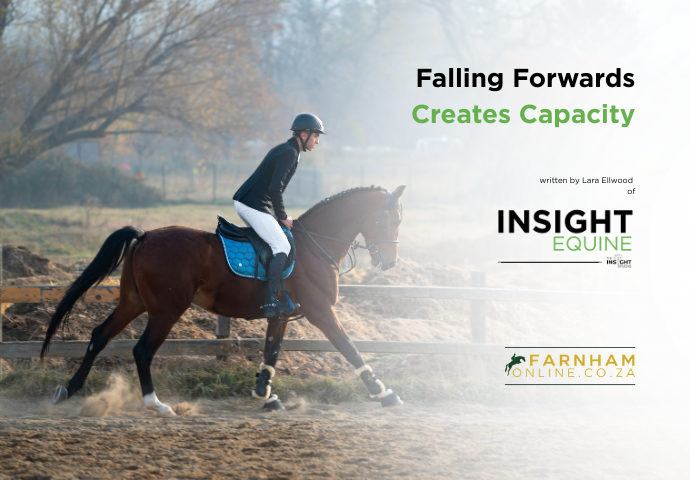

Cognitive and mindset coaching steps in to help you LEVEL UP! In competition, in lessons, at school, business and in our general lives, pressure is inevitable. How we cope with it, is what matters. How do we learn to channel it, and not crumble under it. In the perspective of a high performer, it is a tool of pure precision. Cognitive and mindset coaching can help you shift pressure into performance.
Shhh I’m Busy!
The world we live in values a mentality of speed, performance and hustle. This has resulted in a huge disconnect from ourselves. Often when I ask clients what they are feeling in their bodies they are unable to conceptualise their feelings or the bodily sensations that are attached to these.We override what our bodies are telling us. A huge part of leveling up and stepping into performance, means becoming more intentional and aware of what is happening in “our world” and our bodies. We become reactive, anxious, and out of sync—functioning, but not fullyfeeling. When we become more aware, we develop an essential skill of emotional intelligence, which kick-starts our journey into unlocking our potential in the arena.
Let’s Reconnect
Cognitive and mindset coaching invites us to return to ourselves with focused awareness and intention. Through practices that reconnect mind and body, we begin to notice what’s happening internally in real time. We stop reacting and start responding with clarity and strategy. When we are in this space, pressure becomes fuel. Instead of coping, we step into a space where we can truly lead, compete, and thrive.
Under Pressure
When we do not know how to channel pressure and it becomes overwhelming, the brain shifts into a survival state. Our brain stops thinking clearly and starts reacting emotionally. We may forget our track, overcorrect, or grip and chase unnecessarily—all because our cognitive control has been overridden by stress signals.
This neurological shift can be the difference between a winning round and a total unravel. Reaction replaces intention. All riders are vulnerable to this if they don’t have mental tools in place. Without awareness and regulation, pressure moves from a tool for peak performance to a trapdoor into fight, flight, or freeze.
“Pressure is hard because we care.”
Why does pressure get to us? At its core, it’s because wecare deeply. We careabout our goals, our performance, our potential. Pressure comes from the desire to succeed colliding with the fear that we might not. Sometimes underneath that ambition is often a quiet, nagging doubt.
When we feel pressure, the brain perceives a potentialloss—not just of success, but of self-worth, identity, or control. Why would we want to experience this if we could avoid it? Pressure isn’t just about the moment we are in, but it’s also about the meaning we’ve attached to it. And if we don’t consciously shift our mindset, fear ends up unraveling us instead of fueling our performance
How cognitive coaching changes the game:
Mindset coaching teaches you how to interpret pressure not as threat, but asactivation. Let’s do this!
You will learn to:
- How to active a state of focus and peak performance
- Move into a space of response and not reaction
- Quickly reset from a state of panic
Having the right cognitive tools gives you the perfect competitive edge. Channel the pressure into your inner game face!
In cognitive coaching sessions, focused on leveling up, means that we will work with thought patterns, language, and emotional habits that either sharpen your edge—or dull it. Through coaching, you learn to:
- Identify your inner narrative or critic
- Spot your unhelpful mental loops in real-time
- Replace self-doubt with purpose-driven focus
Lets move out of the space of thriving means we have to hustle. To thrive and level up we need to act with more awareness and intention
We can bring ourselves back to our bodies, and being intentional by developing tools such as
- Reframing
- Visualisation
- Breathe work
- Engaging our senses
- Temporal distancing
- Mind dumping
About Insight Equine
This article was written by Lara Ellwood of Insight Equine.
Insight Equine offers mindset coaching for riders of all levels, helping individuals gain self-awareness, build confidence, and develop emotional resilience—both in and out of the saddle. Sessions are facilitated by Lara Ellwood, a trained therapist and lifelong horsewoman.
To book or find out more, contact Lara at tiscounselling@gmail.com, call +27 76 149 5830, or follow on Instagram @the.insight.studio.
I am sure we can all agree, our horses have given us some of the happiest memories; moments of freedom, partnership, and friendships we have made along the way. But alongside those highs, many riders know the feeling of nerves creeping in before a class, at the warm-up arena, or even just thinking about the next show. These overwhelming emotions can start to chip away at the joy we find in riding. They can also hold us back from performing at our best and reaching the next level of our potential. We don’t want nerves to cloud the happiness we’ve built with our horses nor do we want them to stand between us and truly thriving in the sport we love. In recent years, Mindset Coaching has emerged as a transformative approach in the equine space, helping riders of all levels develop mental agility, emotional resilience, and a sharper competitive edge.
What Is Mindset Coaching?
Mindset Coaching addresses the thought patterns, emotional awareness, and internal dialogue that directly influence performance. In a sport where every stride counts, mastering the mind is essential.
I strongly believe that the journey into Mindset Coaching begins with building emotional awareness and developing emotional intelligence (EQ). A skill we should all have in the world we are currently living in. Emotional intelligence is the ability to recognize, understand, and manage our emotions. For riders, this self-awareness becomes the bedrock of peak performance.
How Does Mindset Coaching Work?
A rider with this insight can identify when nerves are creeping in before a round, understand how tension affects their body position, and regulate their responses versus an impulsive reaction (We have all done that last minute kick or pull!) This awareness allows for more thoughtful choices and less impulsive or fear-driven behavior.
Even the Harvard Business Review has emphasized that “the mind listens to what you tell it.” This speaks to the power of our emotional intelligence, self-talk and the importance of managing our internal narrative. What we repeatedly think and say to ourselves shapes our beliefs, our physiological state, and ultimately, our performance. Riders who train their mind to be a source of encouragement and clarity rather than doubt and criticism set themselves up for consistent, sustainable success.
How Can It Help Horse Riders?
In recent years there has been an increase of interest and participation in Mindset Coaching in the equestrian community. We have seen riders improve in their ability to handle pressure, bounce back quicker from mistakes, and even quite simply, just understanding their goals more effectively, and what drives them!
EQ, and mindset are not just a personal development buzzword but a performance tool. Whether you ride for rosettes at SA Champs, or personal growth, the mental game matters.
Mindset Coaching doesn’t stop at awareness, this is the most important building block.
With Mindset Coaching, riders learn how to:
-
- Replace self-doubt with grounded confidence
-
- Set impactful goals with meaningful direction
-
- Reframe negative thoughts
-
- Bounce back from setbacks
-
- Channel a mental space of clarity and confidence.
-
- Self-trust and confidence
-
- Replace unhelpful self-talk with intentional, empowering language
-
- Build pre-performance routines that cultivate focus and calm
-
- Channel nerves into purposeful energy
-
- Understand and regulate the pressure of competition in a healthy way
-
- Improve rider-coach communication
-
- Identify limiting beliefs that sabotage progress
-
- Replace self-doubt with grounded confidence
This Is For All Riders – Not Just The Competitive Ones
Mindset Coaching bridges the gap between knowing what to do and being able to do it. While Mindset Coaching is essential for riders looking to compete at the highest levels, it is equally powerful for amateurs, hobbyists, and developing riders. This is a sport of the mind as much as the body. The tools of mindset management, emotional regulation, and mental rehearsal are just as valuable in the show ring as they are at home. Mindset Coaching helps us dive into the granular detail of “what is our why” in this sport.
By applying both cognitive and mindfulness tools, riders can:
-
- Distinguish between intrinsic and extrinsic motivation
-
- Set goals that are aligned with their values, not just outcomes
The lessons learned through Mindset Coaching extend far beyond the saddle. Athletes in all sports benefit from mental skills training, and equestrianism is no exception. Focus, resilience, goal-setting, and emotional control are universal attributes of high performers.
Riders often face unique challenges: the unpredictability of a living, breathing partner; the weight of expectation; the emotional rollercoaster of competition. Mindset Coaching meets these challenges head-on by offering practical tools and a framework to thrive through them.
Mindfulness techniques enhance this process by helping riders remain present in the saddle, and shift attention from outcome based to progress goal execution.
The true competitive edge lies within: in the clarity of the mind, the regulation of emotion, and the ability to stay grounded when pressure peaks. Your mind leads the way.
About Insight Equine
This article was written by Lara Ellwood of Insight Equine.
Insight Equine offers mindset coaching for riders of all levels, helping individuals gain self-awareness, build confidence, and develop emotional resilience—both in and out of the saddle. Sessions are facilitated by Lara Ellwood, a trained therapist and lifelong horsewoman.
To book or find out more, contact Lara at tiscounselling@gmail.com, call +27 76 149 5830, or follow on Instagram @the.insight.studio.